
El Niño and Your Pets: How Heavy Rain, Heat and Sudden Temperature Swings Affect Dogs and Cats
In short
A strong El Niño is under way. On November 12, 2026, NOAA said a strong-to-very-strong El Niño is likely to last through early 2027. Veterinarians in Brazil, where forecasters expect heat, heavy rain and sudden cold snaps, are warning dog and cat parents that this kind of weather swing brings real health risks: heatstroke and dehydration on hot days, skin and ear infections and leptospirosis after heavy rain, and flare-ups of breathing or joint problems when temperatures drop fast. El Niño doesn't make a pet sick by itself. The weather it brings does. The same advice applies in the U.S., where NOAA's winter outlook favors a wetter-than-average season across the South and along the East Coast. Plan walks around the weather, dry your pet thoroughly after rain, keep them away from puddles and floodwater, keep vaccines and parasite prevention up to date, and call your veterinarian early if something seems off, especially with puppies, kittens, seniors, flat-faced breeds and pets with heart or lung conditions.
What's happening with El Niño right now
El Niño is a natural climate pattern. Every few years, the surface of the eastern tropical Pacific Ocean warms well above normal, and that shifts rain, storms and temperatures in many parts of the world.
This year's event is a big one. In its November 12, 2026 update, NOAA's Climate Prediction Center kept its El Niño Advisory in place. It said a strong-to-very-strong El Niño is likely through January–March 2027, and that there is roughly a 60% chance this event ends up stronger than any El Niño on record since 1950. NOAA also notes that even a very strong El Niño makes typical weather impacts more likely, not guaranteed.
In Brazil, a joint bulletin from the country's weather and disaster-monitoring agencies, as reported by the trade site Portal Pet News, points to above-average temperatures across most of the country, heavier rain in the South, possible sudden temperature drops, and higher wildfire risk in parts of the Center-West and North. That's what prompted veterinarians there to speak up.
In the U.S., NOAA's 2026–27 Winter Outlook favors wetter-than-average conditions from California across the southern states to Florida and up the East Coast, and a warmer-than-average winter across the northern U.S.
Why vets are paying attention
The warning from Brazilian vets, including the veterinary group WeVets, is less about any single storm and more about speed. In just a few days, a pet can go from intense heat to heavy rain to a sharp cold snap. Each of those brings a different risk, and pets don't get much time to adjust.
As the vets put it, the risk isn't El Niño itself. It's the weather that comes with it, and the fact that owners need to adjust walk times, sun exposure, water and outdoor time quickly when the forecast flips.
Heat: heatstroke, dehydration and burned paws
Dogs cool themselves mainly by panting. In high heat, and especially when heat comes with humidity and exercise, panting may not be enough, and body temperature can climb dangerously. Cats can overheat too, even though they tend to hide it.
Pets at higher risk in the heat
- Flat-faced (brachycephalic) dogs such as pugs, bulldogs, French bulldogs, shih tzus and boxers
- Flat-faced cats such as Persians and Himalayans
- Puppies, kittens and senior pets
- Overweight pets
- Pets with heart or breathing problems
- Thick, double-coated breeds
Warning signs that need a vet right away
- Very fast or heavy panting that doesn't settle
- Heavy drooling
- Weakness, stumbling or confusion
- Vomiting
- Tremors, collapse or fainting
Simple ways to lower the risk
- Walk early in the morning or in the evening, not in the midday heat.
- Keep fresh water in more than one spot at home.
- Skip intense exercise on hot, humid days.
- Test the pavement with the back of your hand. If it's too hot for you to hold it there, it's too hot for paws.
- Never leave a pet in a parked car, even for a few minutes.
Heavy rain: skin, ears and leptospirosis
Rain brings two very different problems.
Damp coats and ears
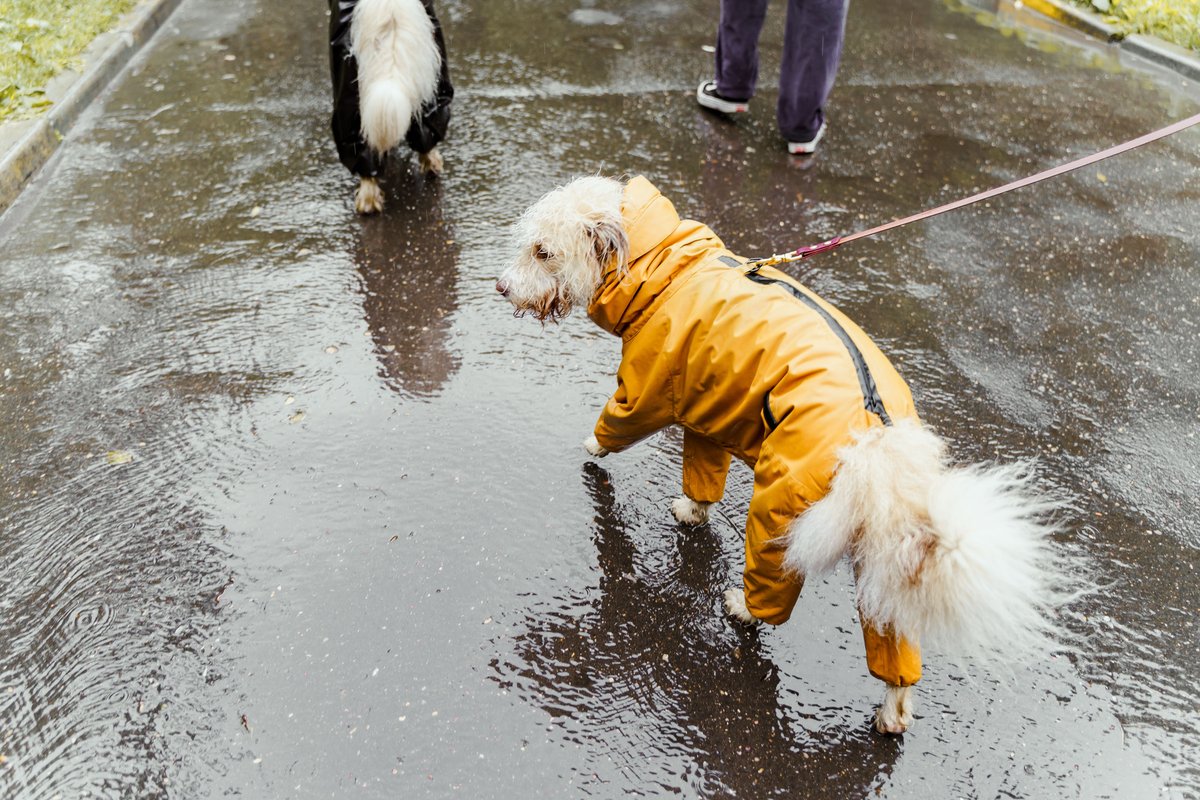
Fur, skin folds and ears that stay wet can become irritated and infected. After a walk in the rain or a splash in water, dry your pet thoroughly, paying extra attention to paws, the spaces between the toes, the ears, and any thick or folded areas of coat. Look out for redness, a bad smell, scratching or head shaking.
Leptospirosis
This is the bigger concern. Leptospirosis is a bacterial infection spread through the urine of infected animals, often rodents and wildlife. The bacteria can survive in water and soil for weeks to months, and the CDC notes that risk rises after heavy rain and flooding. Dogs usually pick it up from puddles, mud, ponds or slow-moving and standing water. It can cause serious kidney and liver illness, and it can also spread to people.
What helps:
- Keep your dog out of puddles, floodwater, mud and stagnant water, and don't let them drink from them.
- Bring fresh water on walks.
- Discourage rodents around your home and yard.
- Ask your veterinarian about the leptospirosis vaccine. It's available for dogs in the U.S., and the AVMA says experts now recommend it for all dogs, not only "country" dogs. The CDC notes the vaccine doesn't cover every strain, so avoiding exposure still matters.
Rainy, humid weather can also mean more mosquitoes, fleas and ticks. Keep parasite prevention current year-round, as your vet recommends.
Sudden temperature drops: breathing and joints
According to the Brazilian vets, a sudden cold snap doesn't cause infections by itself. But it can make existing breathing problems worse and make pets with arthritis or other joint problems stiffer and more uncomfortable.
- Give older and arthritic pets a warm, padded bed away from drafts and cold floors.
- Shorten walks on cold, wet days for seniors and small or short-coated dogs, and think about a coat for dogs who feel the cold.
- Watch for a cough that won't go away, nasal discharge, labored breathing, a bluish or purplish tongue, or a sudden drop in energy. Don't write these off as "just the weather." Call your vet.
Smoke and poor air quality
In areas where El Niño brings drought and wildfires, smoke can irritate pets' eyes and airways. On poor air-quality days, keep walks short, keep pets indoors as much as you can, keep the home ventilated without letting smoke in, and watch for coughing, watery eyes or trouble breathing.
A quick El Niño checklist for dog and cat parents
- Check the forecast daily and plan walks around it.
- Keep fresh water available indoors and on outings.
- Dry your pet thoroughly after rain, especially paws, between the toes and ears.
- Keep pets away from puddles, mud, floodwater and standing water.
- Keep vaccines and flea, tick and mosquito prevention up to date.
- Adjust beds and resting spots when the temperature drops.
- Cut back outdoor time on smoky or poor air-quality days.
- Have your vet's number, and the nearest emergency clinic's, saved in your phone.
- Add pets to your household emergency and flood plan.
When to call your veterinarian
You don't need to wait for an emergency. As the WeVets veterinarian noted, changes in behavior, refusing water or food, or changes in breathing are reason enough to get your pet checked, especially if they're older or already have a health condition. Go to an emergency vet right away for collapse, seizures, repeated vomiting or real difficulty breathing.
Frequently asked questions
Does El Niño make pets sick?
Not directly. The risk comes from the weather El Niño tends to bring: heat waves, heavy rain and flooding, sudden cold snaps and, in some regions, wildfire smoke.
Is leptospirosis only a risk in the countryside?
No. The CDC says almost any dog can be at risk, whether they live in the city, the suburbs or the country. Puddles, urban parks and even fenced yards can be contaminated, especially after heavy rain. Ask your vet whether your dog's leptospirosis vaccination is up to date.
Are cats at risk too?
Yes, especially from heat and from sudden changes in temperature, and outdoor cats can be exposed to floodwater and wildlife. Flat-faced breeds, seniors and cats with heart or breathing problems need extra watching.
Does this matter if I'm in the U.S.?
It can. NOAA's winter outlook favors a wetter-than-average season across much of the southern U.S. and the East Coast. Forecasts are probabilities, not guarantees, but it's a good season to keep rain and standing-water safety in mind.
More pet-care reading
Weather is one of the things that can change a dog's day, especially when you travel. Our packing guide covers food, water, records and car safety.
Read the traveling-with-dogs guideSources
- Portal Pet News (2026). El Niño acende alerta para a saúde de cães e gatos. Brazilian veterinarians' warning and the Painel El Niño 2026-2027 forecast (Portuguese).
- O Tempo (November 5, 2026). El Niño pode afetar cães e gatos; veja dicas para cuidar dos pets. Comments from WeVets veterinarian Vinícius Rodrigues Alves (Portuguese).
- NOAA Climate Prediction Center (November 12, 2026). ENSO Diagnostic Discussion.
- NOAA (2026). El Niño looms large over U.S. Winter Outlook.
- Centers for Disease Control and Prevention. Leptospirosis in Animals and About Leptospirosis.
- American Veterinary Medical Association. Leptospirosis client brochure.
These statements are general information and are not a substitute for professional veterinary advice. MedsMeHappy products are supplements and are not intended to diagnose, treat, cure or prevent any disease.
Comments
Enter your name and email once to join the discussion. Comments are reviewed before they go live.
Commenting as . You're signed up for pet-health tips.